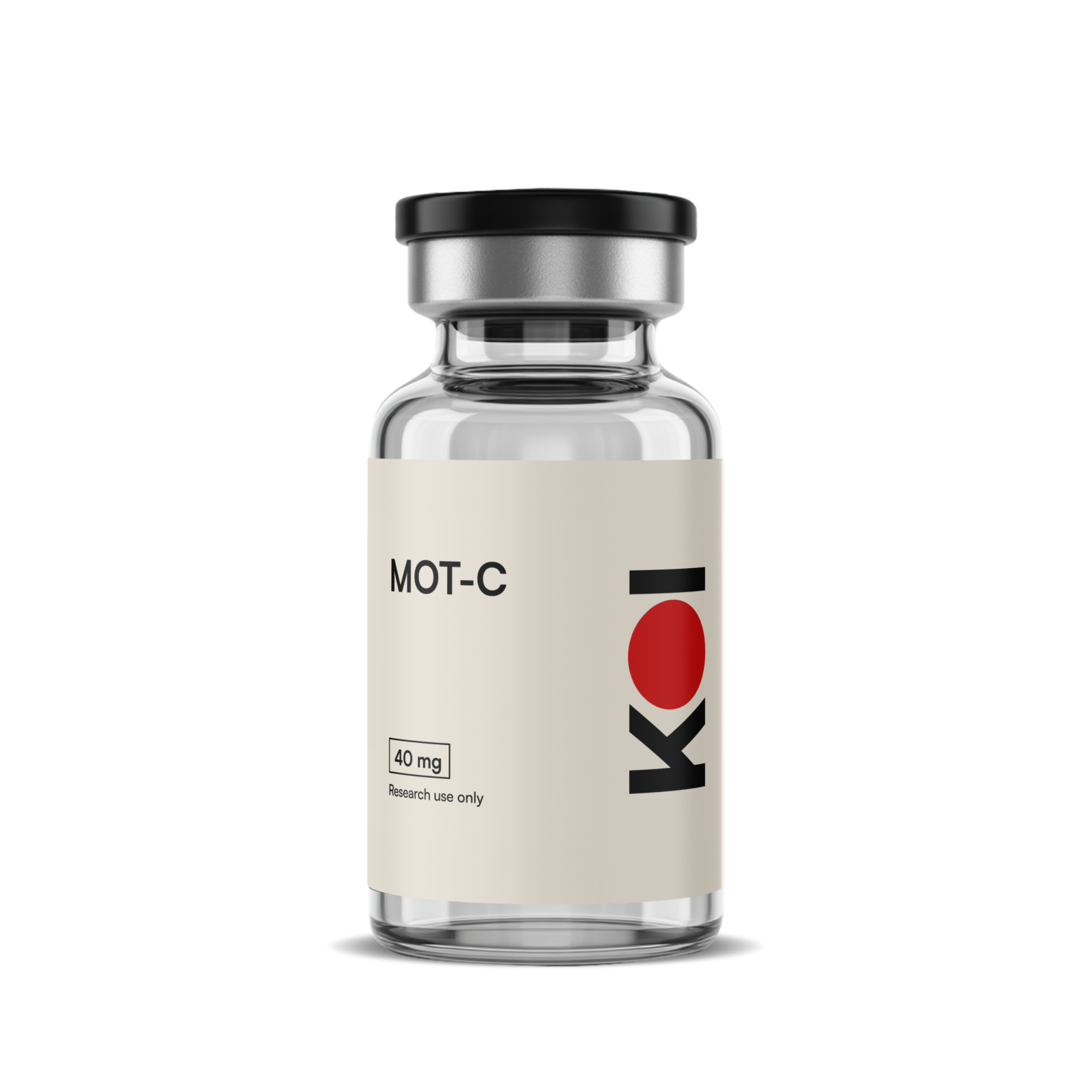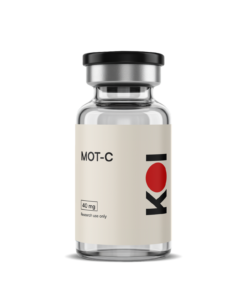
What is MOTS-c?
MOTS-c is a 16-amino-acid mitochondrial-derived peptide (MDP), first described in 2015 by Lee and colleagues. Unusually, it is encoded within the human mitochondrial genome — in the 12S rRNA (MT-RNR1) gene region — rather than nuclear DNA, which distinguishes it from most known peptides. It is studied as one of the clearest described examples of mitochondrial-nuclear retrograde signaling, in which a mitochondrially encoded factor translocates to the nucleus to influence gene expression.
Research areas where laboratories buy MOTS-c for in vitro work include AMPK pathway-activation studies with downstream glucose-uptake effects in skeletal-muscle cell models, mitochondrial-nuclear retrograde-signaling and nuclear-translocation research under metabolic stress, exercise-mimetic and AICAR-related biosynthesis pathways, and aging-research models relating MOTS-c levels to mitochondrial function. The peptide contains two oxidation-sensitive methionine residues, a structure-activity consideration for assay design and handling.
Every lot, independently verified
Compound information
Chemical & structural reference data — specifications, molecular profile and handling.
MOTS-c Mechanism of Action
- Activates the AMP-activated protein kinase (AMPK) pathway, a central energy sensor, with downstream effects on glucose uptake in skeletal-muscle cell models.
- Translocates to the nucleus under metabolic stress to regulate nuclear gene expression — one of the clearest described examples of mitochondrial-nuclear retrograde signaling.
- Modulates fatty-acid and glucose metabolism, feeding into AICAR-related biosynthesis and exercise-mimetic signaling pathways.
- Is encoded within mitochondrial DNA (the MT-RNR1 / 12S rRNA region) rather than nuclear DNA — distinguishing it from most known peptides.
- Circulating levels rise with physical activity and decline with age, underpinning its use in metabolic and aging-research models.
- Contains two oxidation-sensitive methionine residues, a structure-activity consideration for assay design and handling.
MOTS-c Research Applications
- AMPK pathway activation and downstream glucose-uptake effects in skeletal-muscle cell models.
- Mitochondrial-nuclear retrograde signaling and MOTS-c nuclear translocation under metabolic stress.
- Comparative MOTS-c activity in fasting, glucose-restriction, and oxidative-stress in-vitro models.
- Exercise-mimetic signaling pathways and AICAR-related biosynthesis in cell culture.
- Aging-research models relating MOTS-c levels to mitochondrial function.
- Receptor-binding and structure-activity studies under defined buffer and temperature conditions.
Why Buy MOTS-c from Koi Peptides?
- Every batch of Koi MOTS-c is synthesized and lyophilized in the United States, then released against independent third-party laboratory (Freedom Diagnostics Testing) testing.
- Each lot is tested by HPLC for purity, LC-MS for identity confirmation, and endotoxin assay for sterility readiness.
- The lot ID is printed on every vial and ties back to a public COA library, so researchers can verify documentation before they buy and after the vial arrives.
- Orders placed before 2 PM CT ship the same business day, and shipping is free on orders over $200.
- Lee, C., et al. (2015). The mitochondrial-derived peptide MOTS-c promotes metabolic homeostasis and reduces obesity and insulin resistance. Cell Metabolism, 21(3), 443–454. doi.org/10.1016/j.cmet.2015.02.009
- Kim, K. H., et al. (2018). MOTS-c translocates to the nucleus to regulate gene expression under metabolic stress. Cell Metabolism, 28(3), 516–524. doi.org/10.1016/j.cmet.2018.06.008
- Reynolds, J. C., et al. (2021). MOTS-c is an exercise-induced regulator of age-dependent physical decline. Nature Communications, 12, 470. doi.org/10.1038/s41467-020-20790-0
- Merry, T. L., et al. (2020). Mitochondrial-derived peptides in energy metabolism. Am. J. Physiol. Endocrinol. Metab., 319(4), E659–E666. doi.org/10.1152/ajpendo.00249.2020
- Kim, S. J., et al. (2017). Mitochondrial-derived peptides in aging and age-related diseases. Trends Endocrinol. Metab., 28(2), 143–152. doi.org/10.1016/j.tem.2016.10.005
- Lu, H., et al. (2021). MOTS-c and metabolic regulation of mitochondrial-nuclear communication. Free Radic. Biol. Med., 165, 73–82. doi.org/10.1016/j.freeradbiomed.2021.01.007
Regulatory Status
For research use only. Not for human or veterinary use. MOTS-c is supplied to qualified research professionals for in vitro laboratory study. It has not been evaluated by the FDA and is not intended to diagnose, treat, cure, or prevent any disease. Koi Research Labs LLC is a chemical supplier, not a compounding pharmacy under 503A nor an outsourcing facility under 503B of the Federal Food, Drug, and Cosmetic Act. By purchasing, the buyer agrees this material will not be introduced into humans or animals. Misuse may violate federal, state, or local laws.

NAD+ (500mg & 1000mg) (500mg Vial)
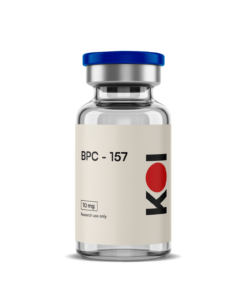
BPC-157 5 & 10mg (10mg Vial)
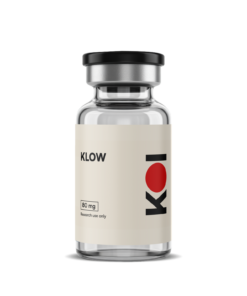
KLOW Blend 80mg: KPV/GHK-Cu/BPC-157/TB-500 (10/50/10/10mg) 


Reviews
There are no reviews yet.